
Questions, Answered
Asked before you ask
Straight answers to the questions landowners actually have — the pricing model, the six-inch boundary, scheduling, and what the finished ground looks like. If yours isn't here, put it in the inquiry form and you'll get a straight answer there too.
Pricing
Why don't you publish prices?
Because no honest number exists before the property is measured. Every ELS quote is one fixed project price, built from a walked site visit — GPS boundary tracing, on-foot density counts, access assessment. A published rate would be a guess dressed up as information, and a guess is exactly what a fixed price is supposed to eliminate.
Why not price by the hour or by the acre?
A unit rate tells you what we estimated, not what you'll pay. A dense acre can take three to four times the work of light brush, so the unit is meaningless — and a metered price quietly moves the overrun risk onto you. Our fixed project price does the opposite: if the ground takes longer than we planned, that's our cost, not your overage.
Isn't an itemized or metered quote more transparent?
It can look that way — until the clock runs past the estimate. A metered quote is transparent about the rate and silent about the total. Ours is transparent in the way that matters most: the number on the proposal is the number you'll actually pay, start to finish, guaranteed before the machine arrives.
Will you give me a number over the phone?
No — and that's a feature. A phone quote is a guess about terrain nobody has walked, and it always gets revised at the property line. We come out, walk the ground with you, map it, and put a firm project investment in writing before we leave. That's the only way the number means anything.
How do deposits and payment work?
A 50% deposit secures your place on the schedule — universal, every project. The balance is due at the completion walkthrough, after the finished ground is checked against the written specification with you. Payment runs through the proposal's secure link by check, ACH, or card, and a financing option is available through the same system.
Scope & Capability
Do you remove large trees?
No. We mulch standing vegetation and stems up to six inches in diameter at breast height. Larger stems are flagged and left standing. Anything beyond that line is timber-harvest or excavation work, which we don't do — and we'll tell you exactly that before quoting, then point you to someone who does it well.
Do you haul material away or burn it?
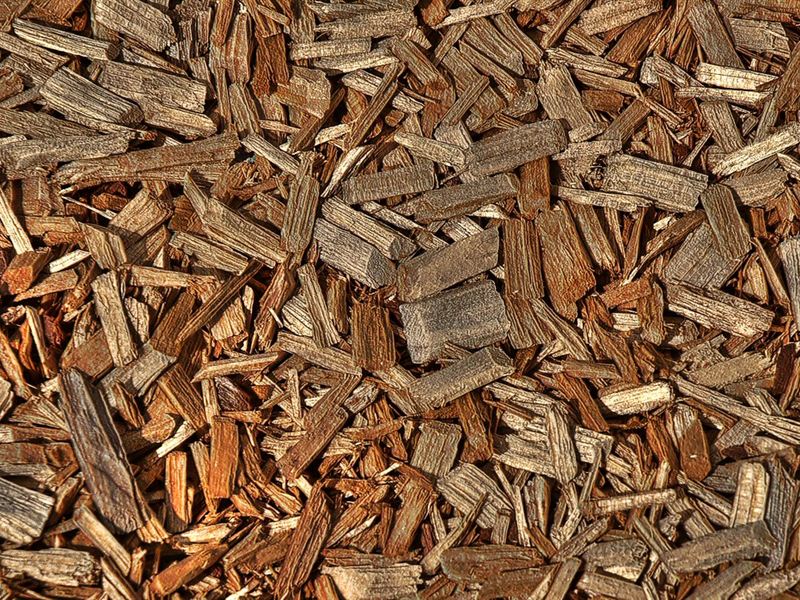
Neither. The processed material stays on site as a three-to-four-inch mulch layer — that layer is the finish, not the leftovers. It controls erosion, suppresses regrowth, holds soil moisture, and feeds the ground as it breaks down. Nothing leaves your property, and nothing goes up in smoke.
Can you do my driveway, grading, or stump removal while you're here?
No. ELS does forestry mulching only — no driveways, no grading, no excavation, no stump grubbing, no hauling. Doing one thing is the entire reason the result is excellent. If your project needs dirt work, we'll say so plainly at the site walk and recommend the right kind of operator for it.
My property is smaller than an acre. Is that a fit?
Sometimes. Our minimum project is one full working day — roughly an acre in typical growth — because mobilizing the machine costs the same regardless of parcel size. For smaller areas, the day still applies; many owners use the balance of it to expand the scope: a trail, a view line, the field edge. Tell us in the form and we'll talk it through honestly.
What about wetlands or shoreline property?
New Hampshire regulates vegetation work near protected water — within 250 feet of lakes like Winnipesaukee, Squam, and Newfound, the Shoreland Water Quality Protection Act applies. We identify at the site walk whether your project touches a regulated zone and scope around it; permits and engineered plans, where required, stay outside our scope and we say so up front.
Process & Scheduling
What happens after I submit the form?
Chris reads the submission personally and calls you to talk through the property — what you have, what you want it to become — and to set up the site walk. No pressure, no script, and no number invented on the phone. From there: the walk, the written proposal, and a decision you can make on your own schedule.
Do I need to be there for the site walk? For the work?
The site walk — yes, ideally. Walking the ground together is where your goals and the flagged boundary get aligned, and it's the best hour you'll spend on the project. The work itself — no. Once zones are flagged and traced, the machine runs without you, and the completion walkthrough happens together when it's done.
How long does a project take once it starts?
Most projects finish within days of mobilization. One machine does the felling, processing, and finishing in a single pass, and there are no haulers, burn windows, or subcontractors to wait on. Your proposal states the expected duration for your specific scope before you commit anything.
How are the work zones and my trees protected?
Boundaries are flagged with you at the site walk and GPS-traced to a ±3-foot tolerance — the machine works inside that line and nowhere else. Trees you want kept are flagged as retention trees and covered by the property-protection guarantee: damage to any of them is on us, in writing.
The Finished Ground
What does the property look like when you're done?
A walkable, open understory: stems cut flush within two inches of grade, a consistent three-to-four-inch mulch layer across every worked zone, retention trees standing untouched, and the root mat intact underground — so the soil doesn't rut, wash, or turn to mud. Every one of those is a written, measurable line in your proposal.
Will the brush just grow back?
Slower than it thinks. The mulch layer suppresses much of the regrowth that bare soil invites, and what does return comes back thin and manageable rather than as a wall. Most owners keep the ground open easily from there — and a periodic maintenance pass, when wanted, is a fraction of the original project.
Is the mulch layer good for the land?
Yes — it's the best part of the method. The layer prevents erosion, holds moisture through dry months, moderates soil temperature, and returns nutrients as it breaks down, all while keeping mud and dust under control. It's the difference between land that was cleared and land that was finished.
One Question Left?
Ask it in the form
Every submission gets read by the person who'll actually stand on your property. Ask anything — you'll get a straight answer either way.
Start Your Project Straight answers · No obligation