
Forestry Mulching
One service, specified in writing
Forestry mulching is mechanical land clearing done in a single pass: a drum cutter on a tracked machine grinds standing brush, saplings, and stems up to six inches in diameter into a mulch layer that stays on the ground. No piles, no hauling, no burning — the machine that fells the growth also finishes the ground.
On Your Property
What the machine actually does
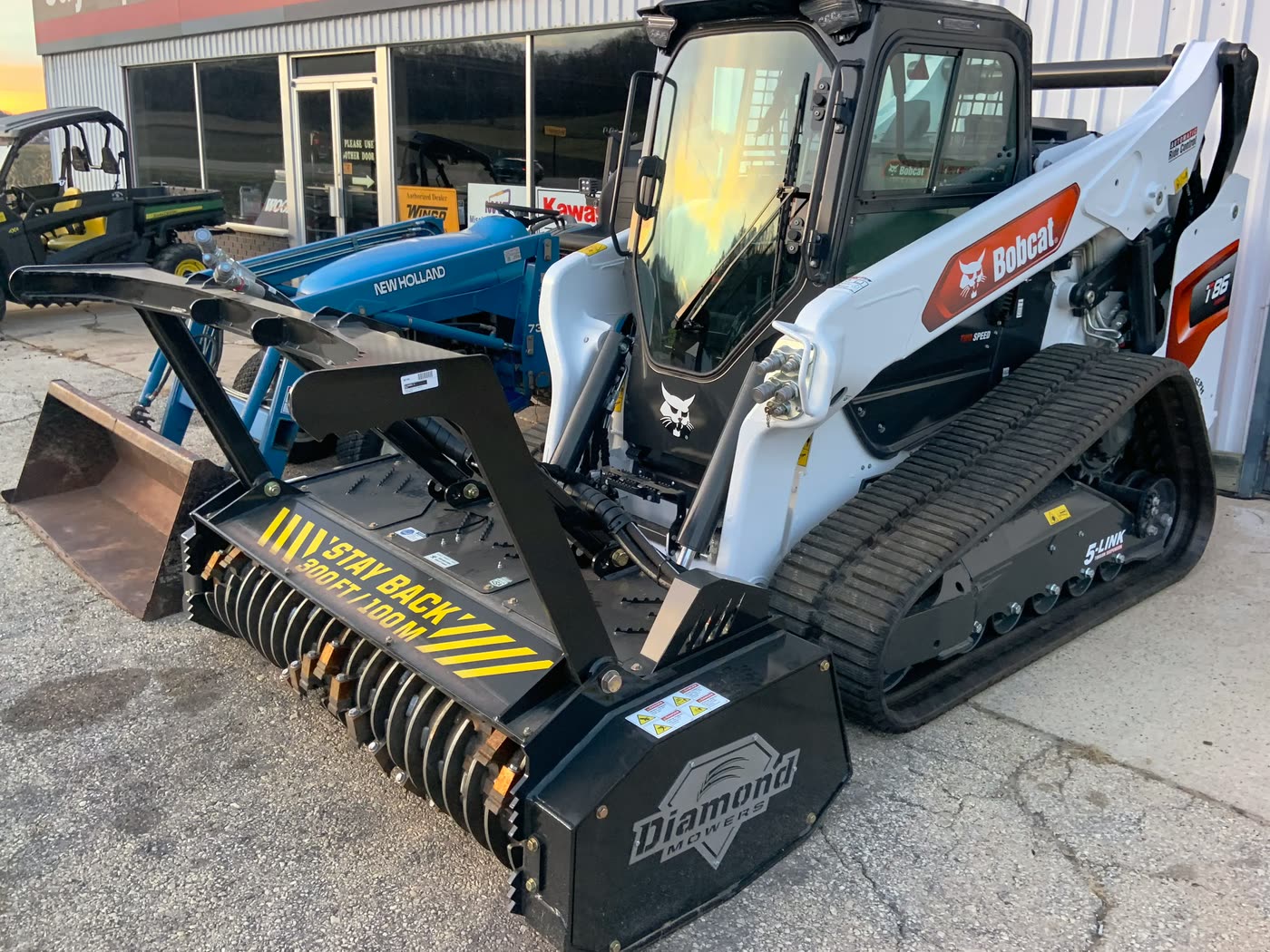
The carrier is a Bobcat T86-2 compact track loader — 115 horsepower on low-ground-pressure tracks, with Super Flow high-flow hydraulics — carrying Bobcat's 61-inch two-speed drum mulcher on front: a hydraulic drum spinning carbide teeth that shears standing growth and processes it into chips in the same motion.
Cutting, processing, and spreading happen in one pass — nothing dragged, nothing staged in piles, no second crew for cleanup. The root mat stays intact, which is why a mulched property doesn't rut, wash out, or turn to mud. Stems above six inches are flagged and left standing — the working ceiling, stated before we quote, not discovered after.
The Finish Specification
What “done” means, in writing
Most land clearing is quoted on a handshake and finished on a shrug. Every ELS proposal carries this table instead — the measurable standard the finished ground is walked against before the balance is owed.
| Mulch depth | 3–4 inches, consistent coverage across all mulched zones |
|---|---|
| Stump height | Ground flush — no stump above 2 inches within any mulched zone |
| Stem ceiling | Up to 6 inches diameter at breast height. Larger stems are flagged and left standing. |
| Root mat | Left intact — this is why there is no erosion and no rutted soil at handoff |
| Boundary tolerance | Within ±3 feet of the flagged and GPS-traced zone line |
| Retention trees | All flagged trees protected; damage to any retained tree is covered under the property guarantee |
| Material handling | Mulched and left on site as ground cover — nothing hauled, nothing burned |
Stated Before You Ask
What this service is not
Forestry mulching opens land for use. It is not excavation, and it does not remove large timber. These stay outside every scope, at every price:
- Stump grubbing or extraction
- Excavation, grading, or fill
- Seeding, loam, or gravel
- Wetland buffer or steep-face clearing
- Hauling, burning, or material removal
- Clearing of significant timber
- Work outside the flagged and mapped boundary
- Permits or inspections unless specifically stated — and never stamped design work, which stays with a licensed professional
If your project needs any of these, say so in the inquiry form anyway — we'll tell you straight what the property needs and point you to someone who does that work well.
The Right Tool When
Properties this was built for
View corridors
Lake and mountain sightlines choked by two decades of understory — opened without touching the mature trees that frame the view.
Walking land
Acreage you own but can't walk. Trails, clearings, and usable ground under the canopy you already have.
Reclaimed fields
Old pasture and field edges going back to brush — caught before the growth crosses the six-inch line and the job becomes a timber operation.
Lot preparation
Subdivision lots and building envelopes opened for survey, perc testing, and site work — on a schedule a developer can actually plan around.
Next Step
Walk your property with us
Tell us what you have and what you want it to become. Chris walks the ground with you, traces the boundary by GPS, and puts a fixed project price in writing.
Start Your Project One fixed project price · The finish spec in every proposal