
Field Notes · The Comparison
Why mulching beats burning or hauling
Cleared brush has to go somewhere, and there are only three destinations: up in smoke, onto a truck, or back into the ground as mulch. In New Hampshire, burning needs a written fire permit and cooperative weather, hauling needs a fleet and a place to tip — and both leave the soil worse than mulching in place leaves it.
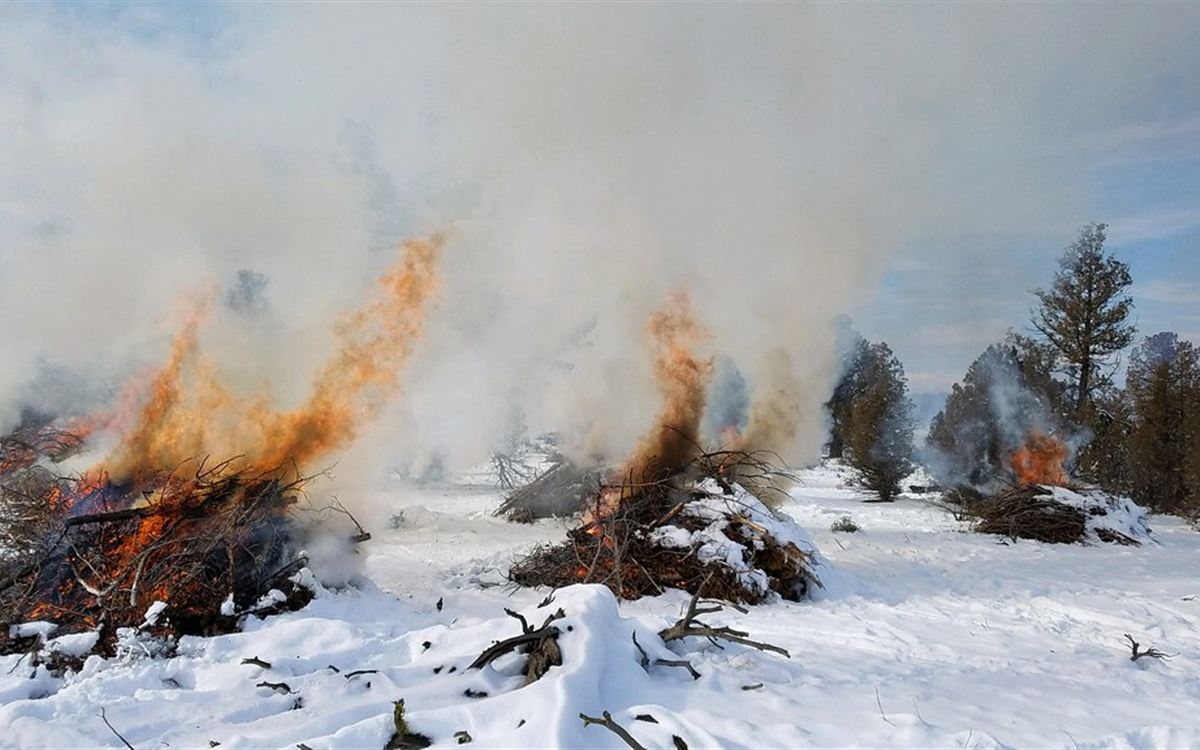
Burning is not actually the easy option. Neither is the dump truck. Here's the note we wish every landowner had before their first clearing quote.
What does it take to legally burn brush in New Hampshire?
A written fire permit — required for open burning unless the ground has adequate snow cover — plus category rules on what and when you can burn, and conditions calm enough that the forest ranger and your neighbors both stay happy. Then the real costs start: piles must season before they'll burn clean, a lit pile must be attended, and a smoldering pile is your responsibility until it's cold and dead. For a few branches, fine. For acres of cleared growth, it's a second project stapled to the first — one that runs on the weather's schedule, not yours.
What does hauling actually involve?
Weight, machines, and distance. Green brush is heavy and bulky, so hauling means an excavator or loader to feed it, trucks to move it, tipping charges where it lands, and repeated trips across your property that compact and rut the ground. Every load is money leaving with material that — processed differently — would have been free erosion control. Hauling makes sense when material genuinely can't stay. Most residential clearing isn't that case.
Why is leaving the material better for the land?
Because bare ground is the worst possible finish. Strip the vegetation and root mat and you've built an erosion problem: topsoil moves with the first hard rain, spring turns the surface to mud, and something has to be seeded — soon — at additional cost. A mulched site skips the whole cycle. The chip layer shields the soil, the intact root mat holds the slope, moisture stays in the ground through dry months, and the material feeds the soil as it breaks down. The "waste" is the finish.
Does the smoke, ash, or chip layer matter for regrowth?
Yes, in opposite directions. A burn scar and disturbed bare dirt are open invitations — the brushy pioneer species you just removed germinate best on exactly that. A three-to-four-inch chip layer works the other way: it suppresses much of the regrowth, and what returns comes back thin and manageable instead of as a wall. Owners who mulch spend their following seasons enjoying the land, not re-fighting it.
Is there ever a case for the old methods?
Sure — and honesty about it matters. If a project removes mature timber, that's a harvest, and logs belong on a truck. If a foundation or driveway is going in, stumps must come out, and that's excavation. Burning still has its place for the homeowner with a small seasoned pile and a valid permit. But for opening overgrown acreage — the view corridor, the walking woods, the reclaimed field — mulching in place beats both alternatives on speed, ground condition, and what your property looks like the day the machine leaves.
Skip The Burn Pile
Get the land back without the smoke
Tell us about the property. If mulching is the right tool, you'll get one fixed project price in writing — and nothing on your land will need a permit, a weather window, or a truck.
Start Your Project Nothing burned · Nothing hauled · One fixed price