
Field Notes · The Machine
The precision behind the cut
A forestry mulcher is not a brush hog with a bigger engine. The difference between a finished property and a chewed one comes down to specifics you can name: ground pressure, tooth geometry, hydraulic flow, grade stability, and a boundary that exists as GPS data instead of a wave of the hand.
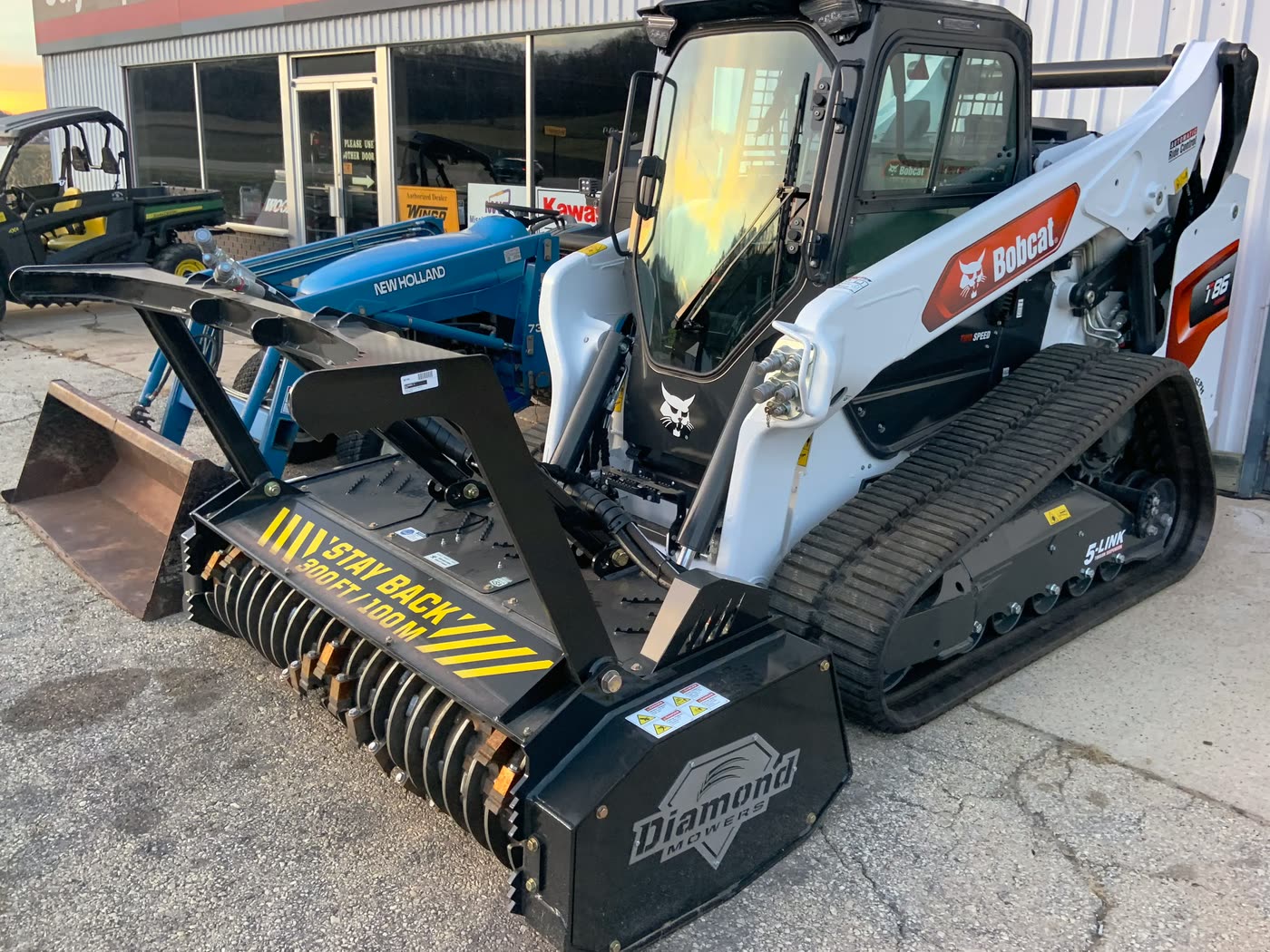
Both of us trained and worked as mechanical engineers before this company existed, so forgive the enthusiasm: the machine is the interesting part, and it's also why the finish looks the way it does. What's actually happening under that spinning drum:
Why does ground pressure decide the finish?
A machine's weight divided by its track contact area is the pressure it puts on your soil — and the difference between equipment that floats over a root mat and equipment that trenches through it. A wide-tracked compact carrier spreads its weight to keep that number low, which is why a mulched property has no ruts where the machine worked. Wheeled equipment and heavier excavators concentrate load; on soft New England ground, you can read the machine choice in the soil for years.
What is the mulching head actually doing?
The head is a steel drum spinning rows of fixed carbide teeth, driven by the carrier's high-flow hydraulics. Tooth geometry sets the cut: carbide points shear and shatter woody stems into chips rather than tearing them, and a controlled feed — how fast the operator lets the drum take material — sets chip size and surface consistency. Run too fast, and you get splintered stubble; run with discipline, and the ground comes out looking laid down rather than chewed up. The discipline is the product.
Why does hydraulic flow matter more than horsepower?
The drum runs on the carrier's auxiliary hydraulics, so cutting performance lives and dies on flow and pressure, not the engine badge. A high-flow system keeps drum speed up as material load spikes — the difference between a head that powers through a six-inch stem and one that stalls, tears, and leaves ragged breaks. It's why our Bobcat T86-2 carries Bobcat's Super Flow high-flow package to drive its 61-inch drum, and the same reason we state a six-inch ceiling plainly: that's where the physics stays clean.
Why does slope get scoped on foot?
A tracked carrier keeps its footing and its cut quality on the sloped ground this region is made of — lakeside banks, Belknap foothills, Campton hillsides. But slope work is where equipment limits become safety limits, so grade gets assessed on foot at the site walk, not guessed from a topo map. Ground too steep to work safely gets flagged and excluded, in writing, like everything else.
Where does the GPS come in?
Before the machine starts, the work boundary is walked, flagged, and GPS-traced, and the finished edge is held to within about three feet of that line. Retention trees are flagged individually. It's surveying discipline applied to land clearing — and it's what makes the finish specification in our proposals auditable instead of aspirational. If the line says the machine stops at the stone wall, the data will show the machine stopped at the stone wall.
Why write any of this down?
Because informed customers make better projects. When you know that ground pressure explains the missing ruts, that tooth discipline explains the surface, and that the GPS trace explains the crisp boundary, you also know exactly what to ask any contractor who wants to clear your land — including us.
Precision, Applied
Put the machine on your ground
Tell us about the property — terrain, growth, goals. You'll hear back from the owner who runs the machine.
Start Your Project GPS-traced boundaries · A measurable finish standard