
The Alternative Math
Why mulching beats clear-and-haul
For opening overgrown land, forestry mulching is usually faster, gentler, and simpler than conventional clearing: one machine instead of an excavator and truck fleet, days instead of weeks, and the ground cover stays on site protecting the soil — no burn permits, no tipping fees, no restoration seeding bill at the end.
Side By Side
The comparison that matters
Not against another mulching outfit — against the excavate-and-truck approach most land-clearing quotes in this market are still built on.
Conventional clear & haul
- Excavator plus dump-truck fleet on site
- Material trucked off property, tipping fees apply
- Typically 2–4 weeks, depending on hauler scheduling
- Stripped root mat — bare, rutted soil at handoff
- Burn permit required if material is burned on site
- Separate restoration bill for seeding and erosion control
ELS forestry mulching
- One machine, one operator, on site
- Material stays on site as erosion control and cover
- Complete within days of the mobilization date
- Root mat intact — no rutting, no erosion
- Nothing burned, nothing hauled
- One fixed price per scope — no restoration line item
The machinery math
Conventional clearing is a logistics operation: an excavator to pull growth, a loader to stage it, trucks to haul it, and somewhere to tip it — each machine tracking across your ground, each hand-off adding cost and schedule risk. Mulching collapses that chain into a single machine that cuts, processes, and finishes in one pass. Fewer machines on your property means less staging damage, less mobilization, and fewer things that can slip.
The calendar math
A clear-and-haul project moves at the speed of its slowest dependency — usually hauler availability, sometimes a burn-day weather window. Two to four weeks is typical. A mulching project moves at the speed of one machine with no off-site dependencies at all, which is why most ELS projects finish within days of mobilization.
The soil math
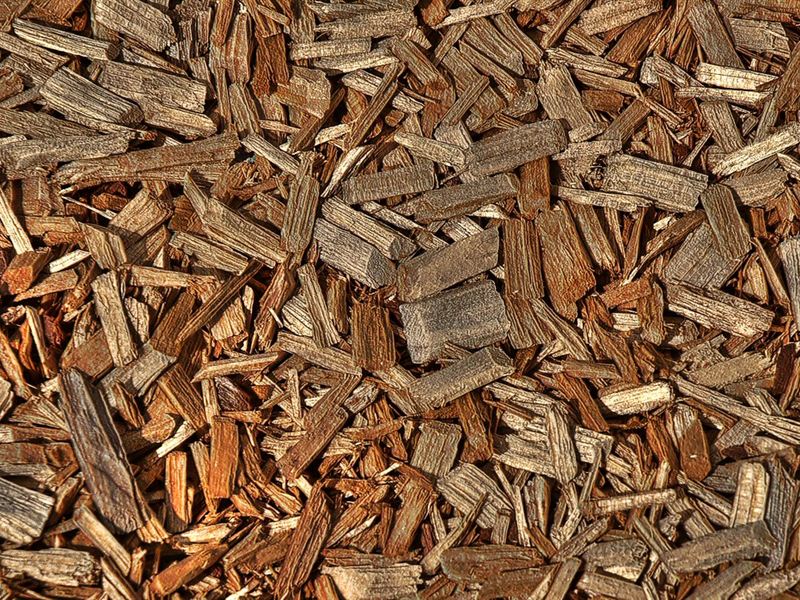
This is the argument most people haven't heard. Stripping vegetation and root mat leaves bare soil that ruts under equipment, sheds topsoil into the nearest low spot with the first hard rain, and needs a seeding-and-stabilization pass someone has to pay for. Mulching leaves the root structure in the ground and puts a three-to-four-inch chip layer on top of it — erosion control, moisture retention, and a slow nutrient return to the soil, produced as a byproduct of the clearing itself.
The permit math
Open burning of brush in New Hampshire requires a written fire permit and cooperative weather, and a smoldering pile is your problem until it's cold. Hauling means trucking weight off your land and paying by the load to tip it. Mulching sidesteps the entire question — nothing leaves, nothing burns, nothing smolders.
Where conventional clearing is the right call
Honesty over marketing: if your project needs stumps out of the ground — a building footprint, a driveway cut, a septic field — or involves harvesting significant standing timber, or changes the grade of the land, then excavation or a timber operation is the correct tool and mulching is not. We'll tell you that at the first conversation and point you to someone who does that work well. Mulching wins when the goal is opening land for use; it isn't a substitute for dirt work.
The Byproduct That Works
The mulch layer is the point
What stays behind isn't waste — it's the finish. A consistent chip layer suppresses the regrowth that would otherwise reclaim the ground in two seasons, holds moisture through August, keeps mud down through spring, and feeds the soil as it breaks down.
It's also why the property is usable the day we leave: no bare dirt to stabilize, no waiting on grass to establish, no washouts after the first storm.
Put It To Work
See what your property needs
Tell us about the land. If mulching is the right tool, we'll walk it with you and put a fixed project price in writing. If it isn't, we'll say so — and point you in the right direction.
Start Your Project Straight answers · One fixed project price