
Field Notes · Fire Mitigation
Fire mitigation, measured from your house
What forestry mulching changes about how a fire behaves on your property, what it doesn't change, and the half that stays with the house itself. Our fire mitigation approach follows NWCG wildland fire behavior principles, and we describe every job in the home ignition zones from NFPA's Firewise USA® program.
New Hampshire's fire season, stated plainly
New Hampshire's Forest Protection Bureau says wildfire season here can begin early in the spring: after the snow melts and before the woods green up, when dry leaves and grass meet low humidity and gusty wind. A second rise often comes in the fall, especially in a dry year. Most New Hampshire wildfires are caught while they're small. Under dry, windy conditions one can grow into a fire that threatens property and homes.
So the risk is real, seasonal, and specific to the site. It isn't the same everywhere on a parcel, and it isn't the same as the West. We don't sell fear; we read your ground.
What is ladder fuel?
Ladder fuel is the vegetation that bridges the forest floor and the tree canopy. The National Wildfire Coordinating Group defines ladder fuels as fuels that give vertical continuity, letting fire carry from surface fuels into the crowns of trees and shrubs. Brush and saplings up to six inches are exactly that layer, and it's exactly what our machine removes.
Does forestry mulching reduce wildfire risk?
It reduces the fuel, which is the one part of the fire environment you can change. Wildland fire training starts with three things that decide how a fire behaves: fuel, weather and terrain. Mulching changes the fuel in three ways:
- Ladder fuel removed. Opening the gap between the ground and the canopy makes it harder for a surface fire to become a crown fire. That is the core of the work.
- Gaps in the brush. Continuous fuel is what lets a fire keep spreading. Breaking up a solid wall of brush gives a fire gaps it has to cross.
- A compact layer. Standing brush becomes a compact layer on the ground. In research on mulched fuels, flames in those compact beds stayed short and slow.
NFPA's guidance says the same thing in its own words: in the zone 5 to 30 feet from a house, remove ladder fuels, the vegetation under trees, so a surface fire can't reach the crowns; farther out, the goal isn't to eliminate fire but to interrupt its path and keep flames smaller and on the ground. What mulching doesn't change is the weather, the terrain, or the embers. More on those below.
How we read your property
We walk every property with you before anything is priced. Beyond the boundary and the stem count, we read three things about fire, and all three go into the Fire Environment Notes in your proposal.
-
Read 01
The fire environment
Fuel, weather and terrain decide how a fire behaves. We can change one of them, the fuel. The day to day weather risk is the state's call: New Hampshire posts a daily fire danger rating.
We record what's growing (white pine, hemlock, brush, saplings, dead and down material), how much of it there is, and how continuous it is, from the ground up into the canopy.
-
Read 02
How fire would move here
Fire moves faster uphill, because rising heat dries and preheats the fuel ahead of it, and narrow draws make that worse. South and west slopes get more sun and can dry out sooner. So the treatment distance isn't the same on every side of your house.
We record the slope, which way each slope faces, the drainages, and the prevailing wind relative to your buildings.
-
Read 03
Your house, the way a responder sizes it up
Fire crews size up a house before they commit to defending it. Their own field guide lists narrow roads, combustible plants within 30 feet, and ember traps as challenges, and names defensible space as something they look for. We read your property against the same checklist.
We record the drive's width and overhead clearance, the distance from brush to each building, and what's in the first five feet.
What is defensible space?
Defensible space is the ground around a building where the fuel has been reduced, so a fire reaching it has less to burn and the building is easier and safer to defend. NFPA's Firewise USA® program describes it in three home ignition zones measured from the house, and notes that homes ignite because of the condition of the home and everything around it, up to 200 feet from the foundation.
How far from my house should brush be cleared?
NFPA's home ignition zones run 0 to 5 feet, 5 to 30 feet, and 30 to 100 feet from the furthest exterior point of the house. Slope stretches them: fire moves faster uphill, so a house above a slope gets more treatment distance on the downhill side. We map the zones to what we measure on your walk.
| 0 to 5 feet | Kept noncombustible. Nothing mechanical, and no mulch layer left here. We point out what you can clear by hand |
|---|---|
| 5 to 30 feet | Ladder fuel removed: brush and saplings mulched, the gap between ground and canopy opened, mulch depth talked through on the walk |
| 30 to 100 feet | Continuous brush broken up, with every flagged keeper left standing |
| Beyond 100 feet | Fuel reduction, access, and forest health, to whatever extent you choose |
| The drive | Brush and saplings opened along it. Firewise guidance asks for 12 feet of width and 15 feet of clearance overhead |
Your half, our half
Embers are the main way most homes ignite in a wildfire, and they can travel more than a mile on the wind. Mulching doesn't stop them. That's why NFPA says to start with the house itself. Defensible space has two halves, and we're plain about which one is ours.
Our half: the fuel
- Ladder fuel mulched in the 5 to 30 foot zone
- Continuous brush broken up from 30 to 100 feet, farther on a downhill side
- Brush opened along the drive
- No mulch layer left within five feet of a building
- A maintenance interval, because regrowth returns
Your half: the house
- Roof and gutters clear of leaves and pine needles
- Vents screened against embers; NFPA suggests 1/8 inch metal mesh
- Nothing that burns against the walls or stored under the deck
- The first five feet kept noncombustible: stone or gravel, not wood mulch
- Big trees limbed up 6 to 10 feet, which is arborist work, not ours
For the house itself, use NFPA's Preparing Homes for Wildfire checklist, and ask your local fire department whether a home assessment is available.
Can mulch catch fire?
Yes. Research on mulched fuels found that the compact beds burned with short, slow flames but could smolder for hours once lit, longest where the mulch was mixed into the forest floor. So placement and depth near buildings matter, and we leave no mulch layer within five feet of your house.
The other trade-offs, said out loud
- Regrowth returns. Brush and saplings come back, and many invasives resprout. The benefit lasts as long as the layer stays down, so every job comes with a maintenance interval.
- Big trees stay. We mulch stems up to six inches. Limbing mature trees higher off the ground is arborist work.
- No guarantee against fire. Nobody can honestly promise a property won't burn. What we promise is the fuel we said we'd treat, treated to the written spec.
The national framework
Four bodies shape how we talk about fire. Here is what each one is, what we take from it, and what we never claim.
| Firewise USA® (NFPA) | A national program that recognizes communities whose residents organize and meet voluntary criteria each year. We use its home ignition zone guidance. It recognizes neighborhoods, not contractors or individual homes, so no company can make a single property "Firewise". |
|---|---|
| NFPA 1140 | The national standard for fire protection in rural, suburban and wildland urban interface areas. NFPA's tree spacing guidance draws on NFPA 1144, which is now part of it. We name it so you know where the guidance comes from; we don't claim anything about our work under it. |
| NWCG | The National Wildfire Coordinating Group sets the wildland fire terms and fire behavior training that agencies use. Our approach follows its fire behavior principles. |
| NH Forests and Lands | The state's Forest Protection Bureau runs fire permits and the daily fire danger rating. For an assessment of your home, start with your local fire department or the Division. |
Access for the people who respond
Clear, wide access and less fuel around a house make it easier and safer to defend. Firewise guidance asks for a driveway at least 12 feet wide with 15 feet of clearance overhead. We open brush and saplings along the drive toward that width; limbs above the machine's reach are outside our scope. How any fire is fought is always the fire service's call.
Woodland with no buildings
On a woodlot or a back parcel with no structures, the goal is different: less fuel, better access for walking and working the land, and a healthier forest with light back on the ground for native regrowth.
For builders and developers
A lot cleared of continuous brush and ladder fuel starts with less fuel next to the future house. The first five feet around the foundation is a landscaping decision, and we'll flag it in the plan.
What you receive
- Fire Environment Notes in your proposal, from the walk: slope, aspect, fuel types, the ladder fuel condition, the distance to each structure, access width, and what this project changes in each zone.
- A Defensible Space Summary in your Final Project Portfolio, written to be shared on its own with your fire department or a future buyer: the zones treated and their distances, before and after photos from the same points, what changed, the maintenance interval, and your next steps on the house itself.
- A 12-month regrowth check-in, when we walk it with you and show you what returned.
| Structures | Main house; detached garage |
|---|---|
| Slope and aspect | Moderate slope falling to the southwest, below the house |
| 0 to 5 feet | No mulch layer left. Leaves along the north wall flagged for the owner to clear |
| 5 to 30 feet | Ladder fuel removed; the gap from the ground to the lowest limbs opened |
| 30 to 100 feet | Continuous brush broken up; every flagged keeper left standing |
| Downhill side | Treatment carried past 100 feet on the southwest slope |
| The drive | Brush opened along its length toward 12 feet wide |
| Check-in | The 12-month regrowth visit is booked |
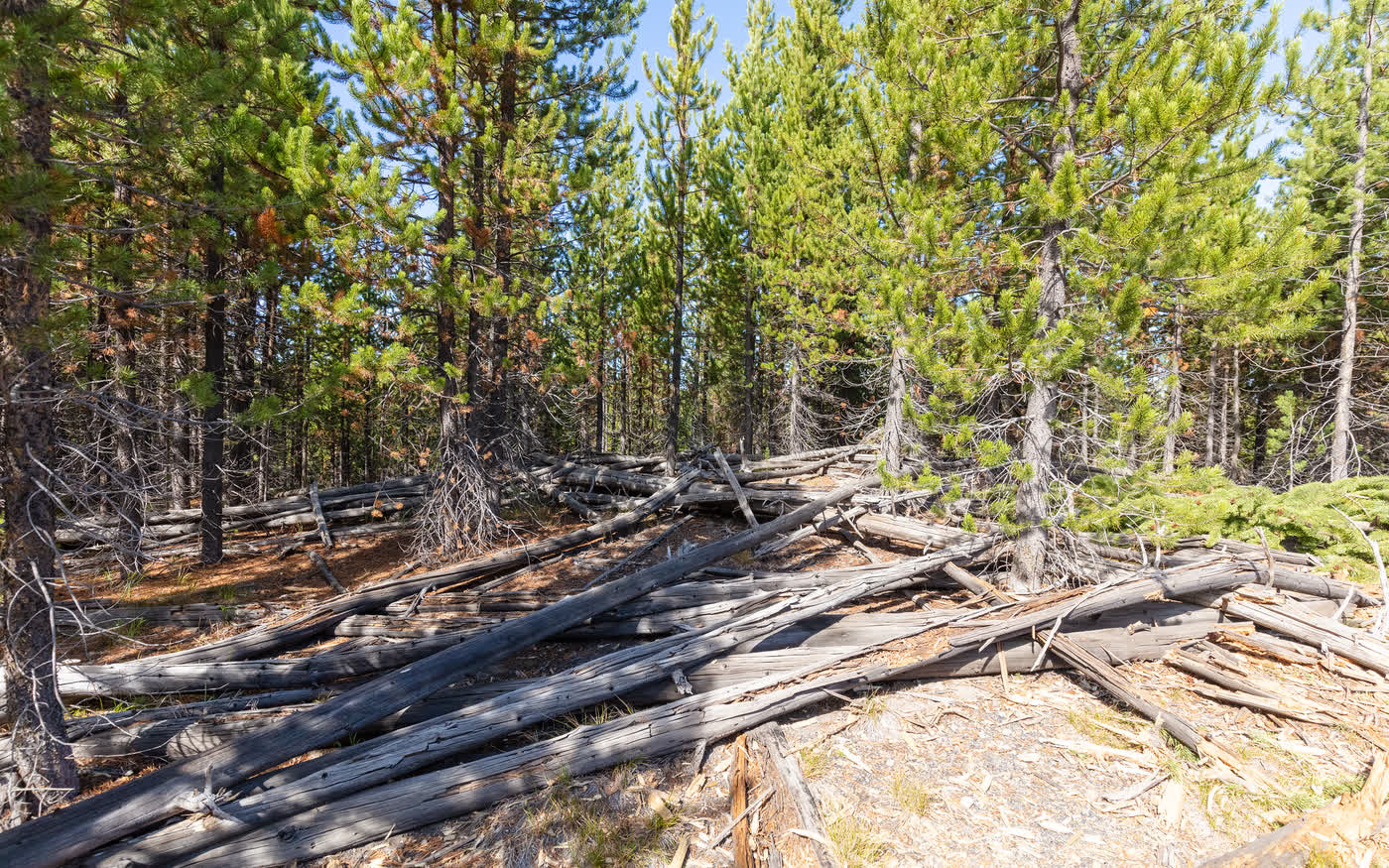
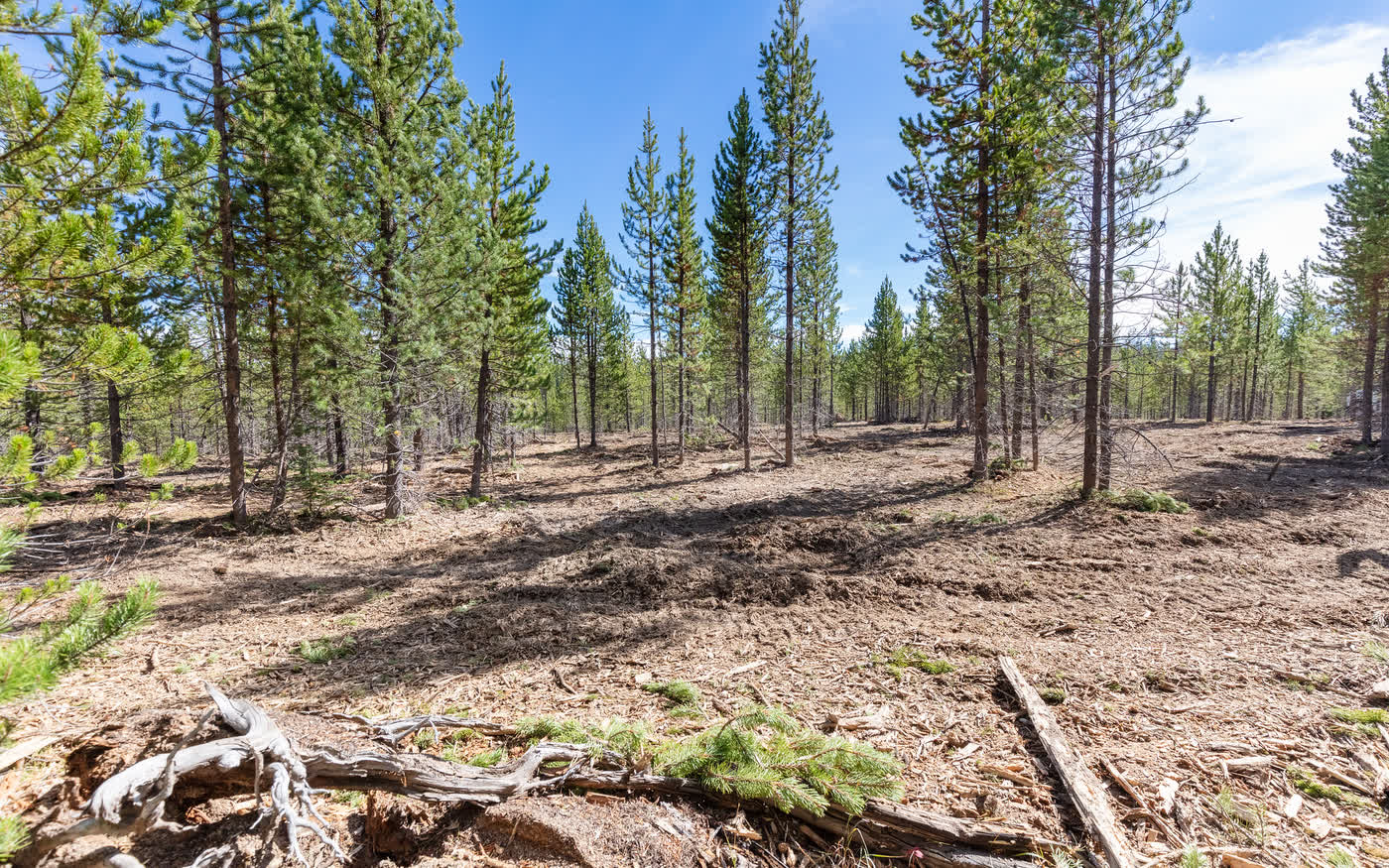
Next steps for the house: screen the attic vents, clear the gutters, move the woodpile off the wall. An ELS observation, not an official fire agency assessment, not a guarantee against fire.
Where this comes from
- National Fire Protection Association: Preparing Homes for Wildfire (the home ignition zones); the Firewise USA program; NFPA 1140; "How to Prepare Your Home for Wildfires".
- National Wildfire Coordinating Group: Glossary of Wildland Fire (PMS 205); Fire Behavior Field Reference Guide (PMS 437); Incident Response Pocket Guide (PMS 461); introductory fire behavior course description.
- NH Department of Natural and Cultural Resources, Division of Forests and Lands: wildfire season releases (2022, 2023, 2024), fire permits, and daily fire danger.
- Lyon and others, "Fire behaviour in masticated forest fuels: lab and prescribed fire experiments", International Journal of Wildland Fire, 2018, supported by the Joint Fire Science Program; Heinsch and others, USDA Forest Service research paper RMRS-RP-107, 2018.
Read Your Own Ground
Find out what's around your house
Tell us about the property: three minutes, no obligation. We'll walk it, measure the fuel by distance from your buildings, and give you a straight answer on what it takes.
Start Your Project Forestry mulching only · Stems to 6 in.